
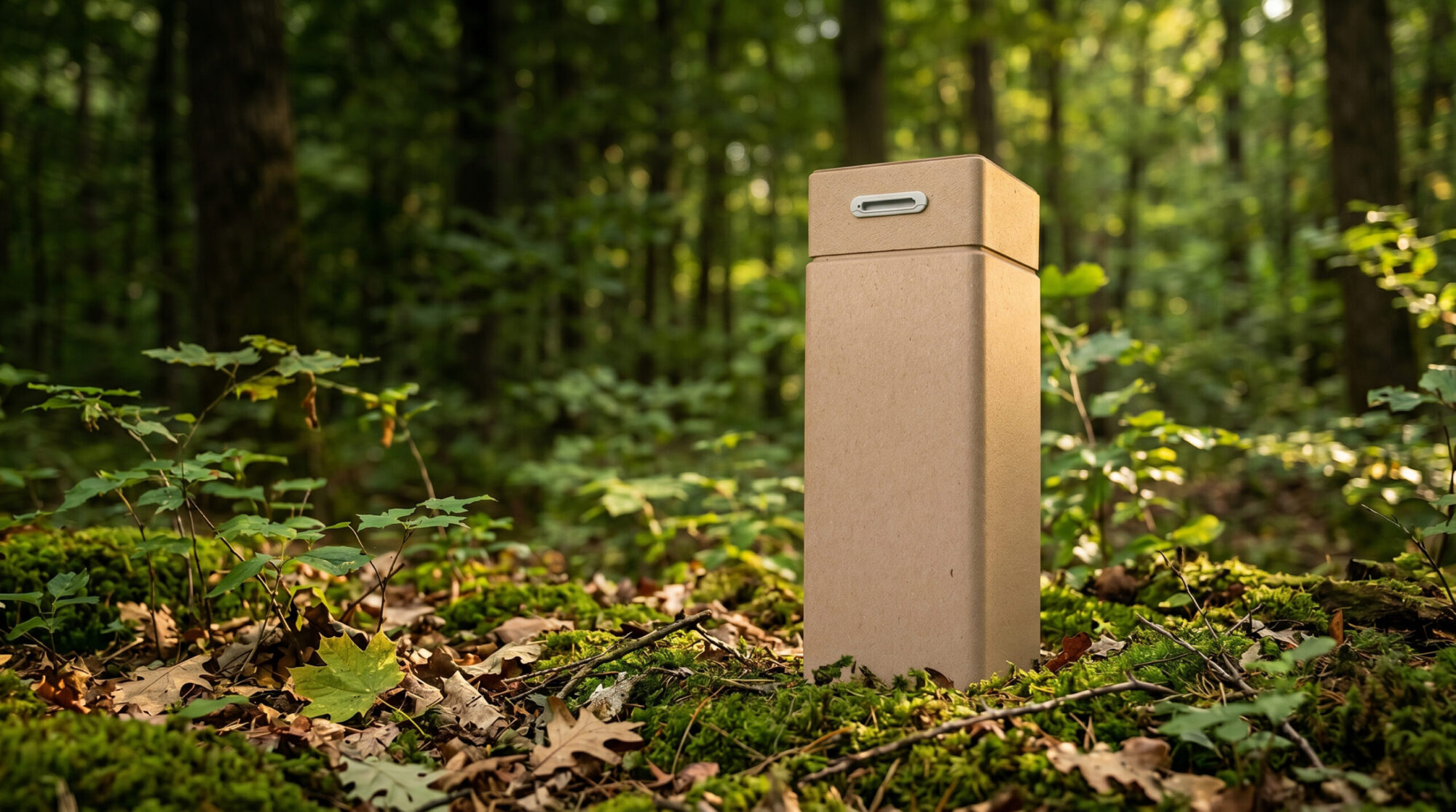
Paper that does not hide.
Many packages are made of composite materials: paper on the outside, metal ring, plastic lid. Recycling then means separating, sorting, and special disposal. Costs that rarely appear on the invoice—but still arise.
The ECO DRUM is made exclusively of high-quality, long-fibre kraft paper. After use, it can be flattened and placed directly in paper recycling. No disposal costs. No special routes. No excuses.
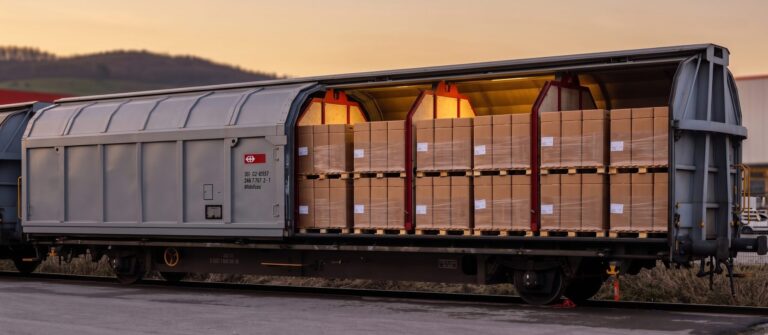
In addition, kraft paper is lighter than metal or plastic. This reduces the total weight of your load—and therefore directly reduces fuel consumption and CO₂ emissions per trip.
Sustainability that pays forward.
The benefits of the ECO DRUM don’t end with you. Those who need fewer trips transport more efficiently. Those who transport more efficiently reduce CO₂ emissions. And those who reduce CO₂ emissions can pass that on to their customers — as a measurable contribution to their sustainability report.
This creates a cycle that affects not only packaging but the entire supply chain. From your warehouse to the end customer.
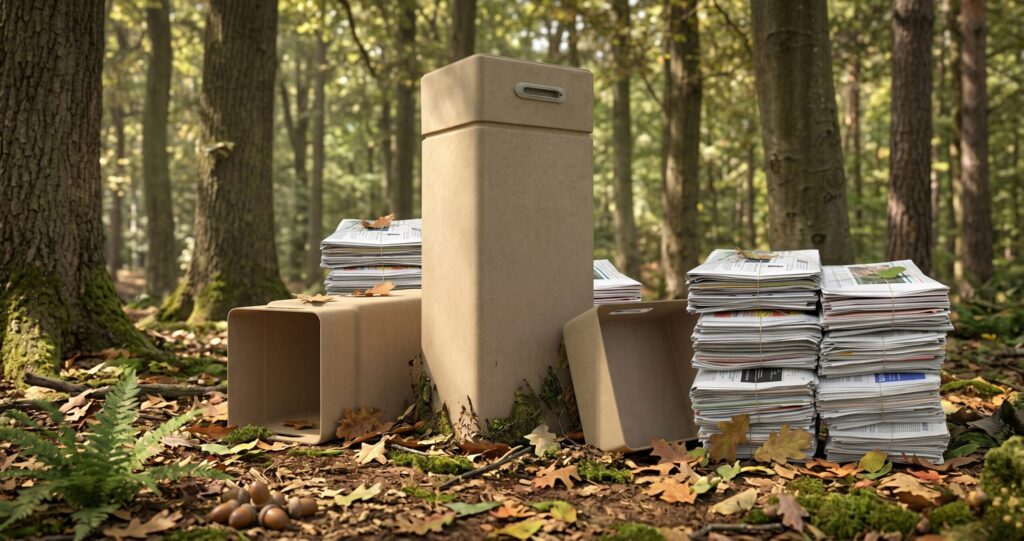
Sustainable. Verifiable.
The ECO DRUM does not make promises it cannot keep. Each of the four benefits is measurable, certified, or legally verifiable—ready for your sustainability report.

100% kraft paper from a renewable raw material, no foreign materials, no separation effort.

Directly into paper recycling. Can be flattened, stored space-savingly, and recycled without special disposal.

Lighter than metal or plastic drums. Less weight per load means less fuel—directly measurable for your Scope 3 report.

PPWR-compliant. The ECO DRUM meets the new EU requirements for recyclability without any need for modification.
ECO DRUM vs. conventional fibre drum
The difference does not start with disposal. It starts with the material. Those who avoid composite materials from the outset do not have a separation problem at the end.
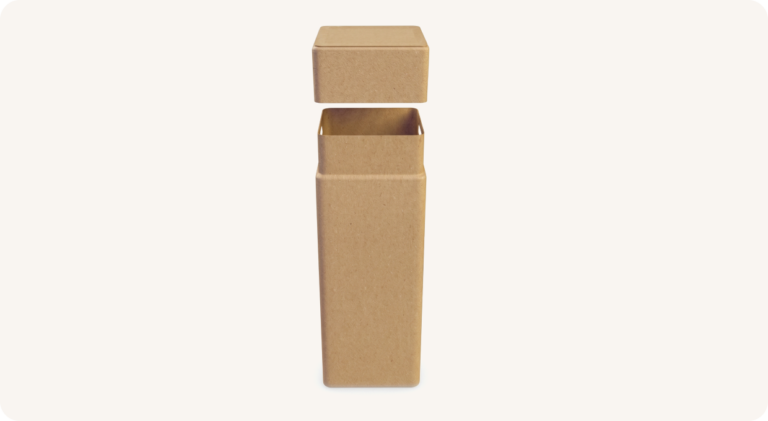
- 100% kraft paper
- Paper recycling disposal, free of charge
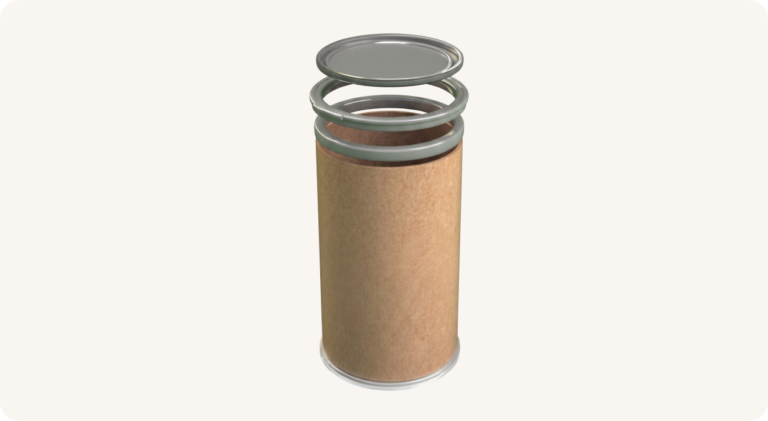
- Metal + plastic + paper
- Paid special disposal
Further Challenges. One Solution.
Sustainability is only one part of the system. Discover how the ECO DRUM simultaneously reduces your logistics costs and ensures the highest level of hazardous goods safety.
Frequently Asked Questions
What sustainability managers and procurement leaders need to know about the ECO DRUM.
Yes. The body and telescopic lid of the ECO DRUM consist exclusively of kraft paper, without metal rings, plastic parts, or composite materials. Material separation is not required. After use, the ECO DRUM can be flattened and disposed of via paper recycling. If a film inliner is used, remove it beforehand and dispose of it separately. A prerequisite for paper recycling is that the packaging is completely emptied and not contaminated with hazardous substances; contaminated containers must be disposed of in accordance with applicable waste regulations. Accessories such as the ECO CLIP should be removed before disposal.
The EU Packaging and Packaging Waste Regulation (PPWR, Regulation (EU) 2025/40) has been in force since August 12, 2026. It requires packaging to be recyclable. The EU establishes the binding criteria for design for recycling via delegated acts, which will take effect from 2030. The ECO DRUM is well-positioned for this: as mono-material packaging made of kraft paper, it can be recycled in the established paper recycling cycle without separation. We provide the material and product data for your compliance documentation.
The ECO DRUM addresses several Scope 3 categories. Regarding transport: more volume per pallet and a lower tare weight compared to steel drums mean fewer trips and less fuel per litre transported, both in your supply chain and for your customers. Regarding disposal: the paper goes into recycling instead of special waste disposal. For your calculations, you will receive the necessary product data from us, such as weight, material, and loading units.
The ECO DRUM consists of unbleached kraftliner, a long-fibre, particularly tear-resistant paper. Depending on the size, the body is wound from 6 to 7 layers of 300 g/m² each; the base is constructed as a sandwich of kraftliner and grey board. The paper comes from sustainable forestry, and the materials used contain up to 70% recycled content.